The Cash Flow Statement
As we mentioned in the introduction, there are different groups of people who read the financial statements, each looking for different types of information. Earnings might be the most important area for investors, but the statement of cash flow is extremely important to management, lenders, and tax authorities as well as investors.
The cash-flow statement is fairly new to the financial statements that companies report. In fact, it has only been a requirement since 1988. Currently every public company filing reports is required to include a cash flow statement within their quarterly and annual reports.
Cash flow is similar to the income statement in that it records a company's performance over a specified period of time, usually over the quarter or year. The difference between the two is that the income statement also takes into account some non-cash accounting items such as depreciation. The cash-flow statement strips away all of this and tells you how much actual money the company has generated. Cash flow shows us how the company has performed in managing inflows and outflows of cash. It provides a sharper picture of the company's ability to pay bills, creditors, and finance growth.
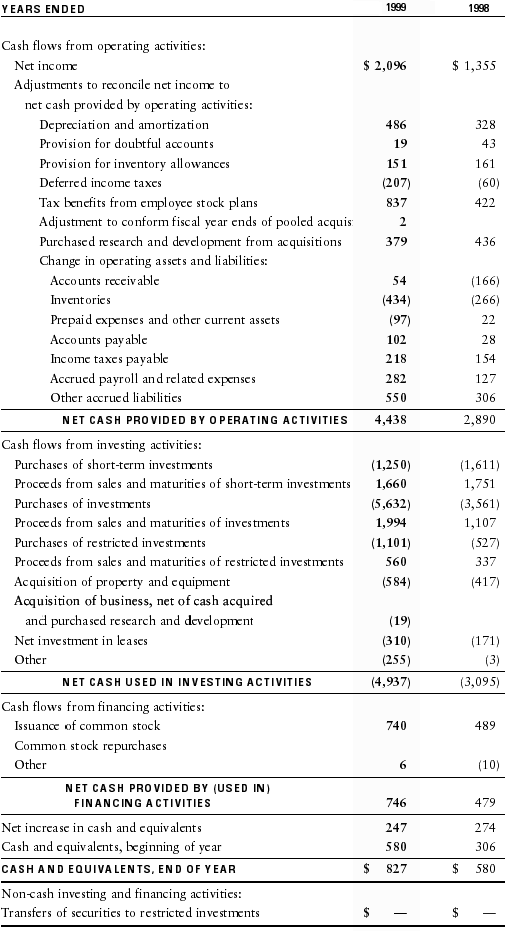
Many of the items on this statement are also found in either the income statement or the balance sheet, but here, they're arranged to highlight the cash generated and how it relates to reported earnings. The cash-flow statement is divided into three parts:
Statement of Cash Flow
- Cash from Operations
- this is cash generated from day-to-day business operations.
- Cash from Investing
- cash used for investing in assets, as well as the proceeds from the sale of other businesses, equipment, or other long-term assets.
- Cash from Financing
- cash paid or received from issuing and borrowing of funds. This section also includes dividends paid. (Although it is sometimes listed under cash from operations.)
- Net Increase or Decrease in Cash
- increases in cash from previous year will be written normally, and decreases in cash are typically written in (brackets).
Why is cash flow so important? Unlike reported earnings, there is little a company can do to manipulate their cash situation. Aside from outright fraud, this statement tells the whole story - you either have the cash or you don't. The cash flow statement requires just as much attention as the other statements. At the very least, look to see if the company is increasing cash over previous years.
Below is an example of a statement of cash flow:
Consolidated Statement of Cash Flow
(in millions, except per-share amounts)