
The Balance Sheet
Investors often overlook the balance sheet. In fact, "overlook" is an understatement at best. Investors tend to focus more on earnings. While earnings are important, they don't tell the whole story. There is a lot to be said for the perpetually unnoticed balance sheet. It is an integral part of a company's financial statements.
The balance sheet highlights the financial condition of a company at a single point in time. This is important; the cash flow and income statements record performance over a period of time, while the balance sheet is a snapshot in time.
Managers, creditors, and investors all need to familiarize themselves with the assets, liabilities, and equity of a company. The balance sheet is the place to find all this handy information. It lists all of the assets held by a company in addition to the portion of those assets that are financed by debt (liabilities) or equity (retained earnings and stock).
The reason it's called a balance sheet is that both the sides balance. That is:
Assets = Liabilities + Equity
Assets, liabilities, and equity are also broken down into sub-categories:
| Left Hand Side (Assets) | Right Hand Side (Liabilities & Stockholders' Equity) |
|---|---|
| Current Assets - this includes cash, accounts receivable , and other assets that can be converted in to cash relatively quickly. | Current Liabilities - this includes a company's liabilities that will come due within the next 12 months. |
| Property & Equipment - this is not exclusive to equipment and property, it can be more accurately described as long term operating assets (less depreciation on these assets). | Long-term Liabilities - debt not maturing in the next 12 months. A good example is outstanding bonds that don't mature for several years. |
| Other Assets - includes anything that doesn't fit in the above categories | Stockholders' Equity - this reveals how the remainder of the company's assets are financed, including common and preferred stock, treasury stock, and retained earnings. |
| Goodwill - the excess of the purchase price over the fair market value of an asset. |
Below is a sample balance sheet. One thing to notice is that totals and subtotals have lines above the figures, this is true for just about every balance sheet:
(in millions, except per-share amounts)
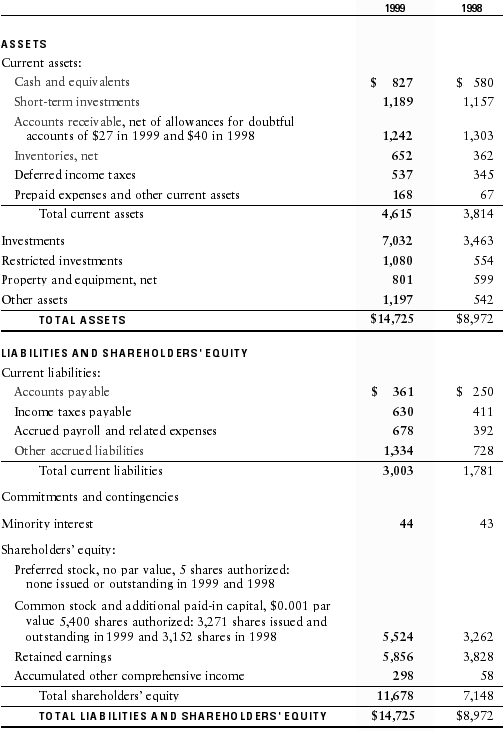
There are many different styles of presenting the balance sheet, regardless of how the it's laid out, all balance sheets contain the same information.